
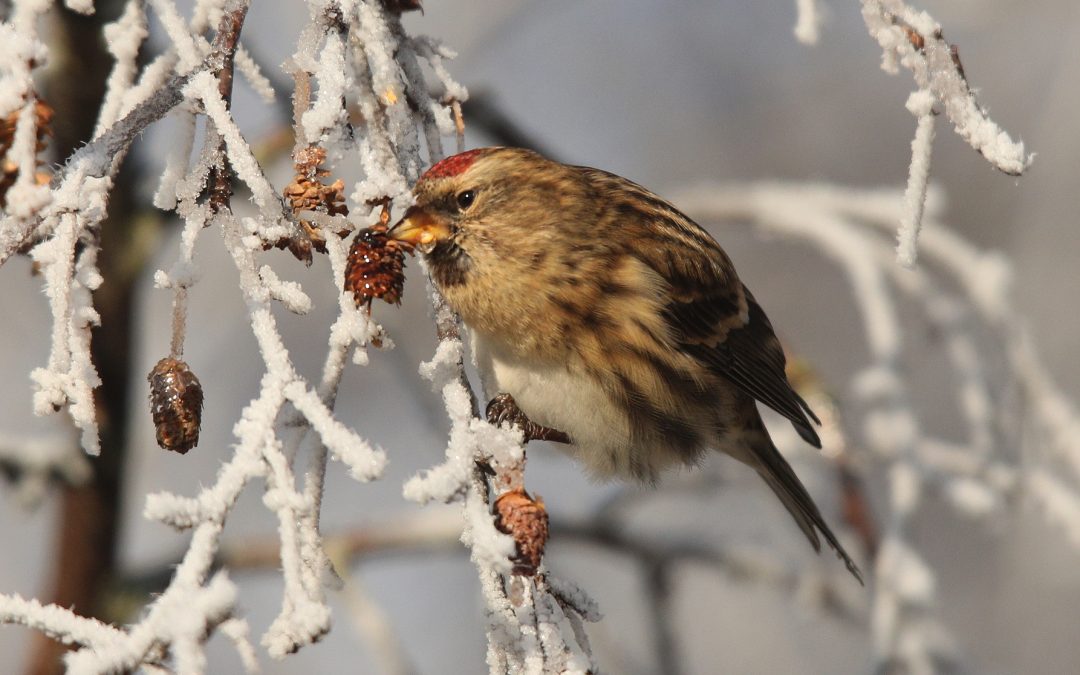
The first official bird survey of the Findhorn Hinterland revealed 27 species – including four red- and nine amber-listed Birds of Conservation Concern.
Biodiversity surveys over the 20 years or so – mostly commissioned by trustee Alan Watson Featherstone over the last decade – played a vital role in the Findhorn Hinterland becoming certified as a Nature30 site in 2025. The open dunes are of national importance for lichens, invertebrates and fungi, and the FHT now has an impressive GIS database of species, carefully curated by volunteer Dr Neil Meikleham.
There are still gaps in our knowledge, however, and one of these – birds – was filled this year with a detailed survey. Bird populations are good indicators of environmental health and a bird survey of the whole of the Hinterland provides a baseline against which future habitat changes can be measured.
In order to monitor bird populations effectively, the survey needed to be easily repeatable, with future surveys using exactly the same method. A reliable base was provided by the British Trust for Ornithology’s Common Bird Census. This method relies heavily on bird song, which over repeated visits is a very reliable means of counting pairs of birds. Eyes as well as ears are very important too though, as not all birds sing. The technique also records bird signs, such as feathers and feeding signs, and activities, including flight directions, and carrying of nesting material or food. As well as the basic skills of being able to identify all bird species likely to be present by sight and sound, high levels of sustained concentration are required for this work and consequently it is a solitary pursuit.
How the survey was conducted
There were six early morning survey visits through the bird breeding season, timed to coincide with peak bird activity. These involved walking to within 50m of all points on the Hinterland, where possible. Where this was not possible, due to large stands of gorse, vantage points were used to listen and watch out for birds.
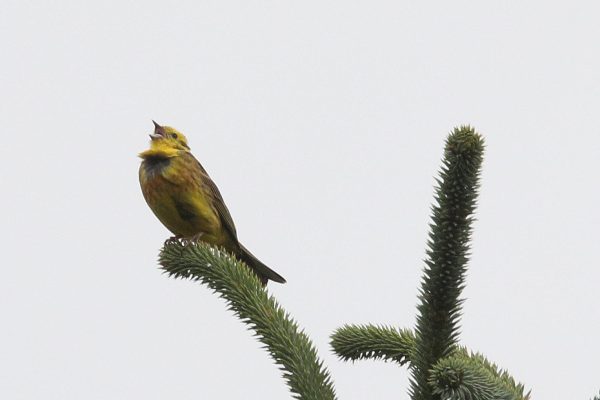
The survey results shows that 197 pairs of birds, of 27 species, bred on the Findhorn Hinterland in 2026. These included four red- and nine amber-listed Birds of Conservation Concern. Red-listed species were: greenfinch, redpoll, linnet and yellowhammer – all of which have suffered severe recent population declines in the UK. Of the amber-listed species two were notable – sparrowhawk (which is a secretive nester – read this story from Alan Watson Featherstone), and willow warbler, with an impressive 25 pairs.
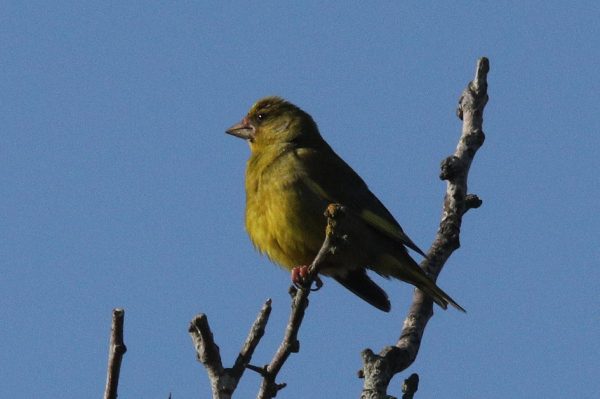
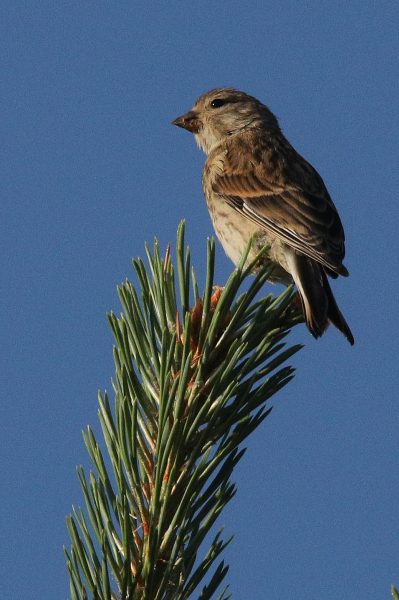
Despite these impressive numbers, and the presence of red-listed species, breeding bird populations on the Findhorn Hinterland are considered to be of onsite significance only, in contrast to the national conservation significance of the dunes (as a whole) for lichens, invertebrates and fungi. This is because, despite significant population declines, all the species found on the Hinterland are still widespread in the Scottish countryside.
Woodland contained the most bird species. The widespread presence of woodland bird species on the open dunes is of concern, however, as it reflects a loss of rare dune habitats through scrub encroachment. The FHT doesn’t own the whole of the dunes, only the part closest to the Ecovillage, which is mostly gorse covered. Protecting the few remaining areas of sandy habitats on the Hinterland, and creating new areas of bare sand that can slowly succeed into prime dune habitats, are top priorities for the FHT. The vast majority of gorse will be allowed to develop with no intervention, however, and some areas may develop into woodland. Future bird surveys will be one way of monitoring these changes.
Please read the full survey on this website. The FHT would like to thank the Highlands and Islands Environment Foundation (HIEF) for grant funding which made this valuable survey possible.
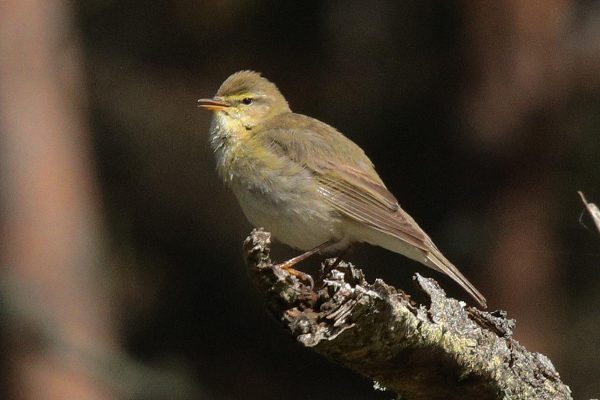
Thank you to Alan Watson Featherstone for all the images.